Wednesday, 19 August 2009

Single Breasted example and another Double Breasted

This is the second of the series where I try and analyse what works or what does not for a suit being worn by colleagues, friends.

The feature for this post is Stephen Luk. A well dressed, elegant gentleman, Steve cuts a dashing figure.

Steve with me outside the Bulow Residenz in Dresden, Germany
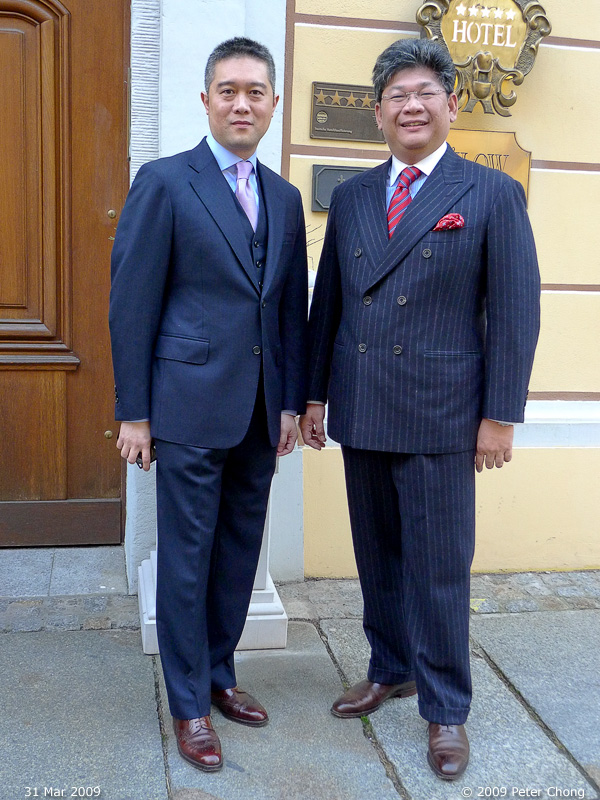


In this picture, Steve is wearing a 3 piece SB, made by A-Man Hing Cheong in Hong Kong. A-Man is one of the three great Bespoke Houses in Hong Kong..the other two being Baroman and WW Chan. The material is a beautiful, very light Super 180 by Scabal's. Known as the "Miracle", it is supposed to be light, finely woven fabric but yet still able to provide a good hang and flow. The shirt is also bespoke by Italian Tailor from Cistes 100% ultrafine cotton. The tie is by Luigi Borrelli and shoes are bespoke by John Lobb Paris.

The cut is particularly apt for Steve, emphasizes his slim and elegant physique. The button point is perfectly selected. The lapel is cut in proportion to his body, rather than by fashion, and is timeless. The coat is slightly nipped at the waist, emphasizing the upper V. His sleeves are cut to show a bit of linen from his shirt cuffs...adding dimension and depth. Shoulders look unpadded or very lightly padded, and are natural, flowing nicely over his shoulders, and allowing the upper sleeve to create a waterfall effect.

Tie is tied slightly askew, a desirable effect to make the entire ensemble looks totally relaxed and uncontrived. I would have put a pocket square on the chest pocket of the coat, but I have never seen Steve wear one, so perhaps I need to encourage him to start wearing them.


I am wearing a bespoke DB suit made by Gordon Yao in Hong Kong. I have been working with Gordon for about 4 years now, and his work is impeccable. The suit is cut beautifully, fully handworked, is very comfortable, and hangs well. Material is a 14 oz JJ Minnis chalkstripe woolen flannel - quite heavy these days, though de rigeur in the 1920. The heft of the material rewards the wearer by the way it hangs superbly with excellent drape. The woolen flannel also a lovely hand feel. I have the suit made up as a 3 piece, so within the DB coat, is a SB waistcoat. This suit, worn as a 3 piece is able to keep me warm without a topcoat through even wintry conditions, as long as it is above -10C.

My shirt is bespoke by Jantzen Tailors, also in Hong Kong. I have all my shirts made by Jantzen. I have been working with Ricky of Jantzen for many years, and have developed a close relationship with him. It is important for one to develop a deep relationship with your bespoke tailor as he needs to understand your body, your needs and inclinations.

My tie is by my favourite Italian tie company - Andrew's Ties in Milan. I have been using them for more than 20 years, and when I started to buy ties from them, they cost only L20,000 directly from a small store in Milan. I have experimented with 7 fold, 8 fold ties from famous and not famous houses, and I do like them to a certain extent...but my favourite ties are still those from Andrew. I must have a collection of nearly 50 from them.

Shoes are the Weymouth, handgrade series from Crockett & Jones. I always wear a silk pocket square, this one is a generic fine Chinese silk, purchased inexpensively in the streets of Hong Kong.

Note also that we are approximately the same height, and the button points of both coats are thus roughly the same level. The DB coat is slightly shorter than the SB, and this is as it should be. This is because the front panels of a SB open slightly to show some trouser leg, but the DB front panels remain closed always, and it needed to be cut slightly shorter to avoid the wearer from looking like he has short legs.

This next picture shows Steve in a more relaxed environment...just after lunch at Castle Weesenstein near Glashutte, Germany.
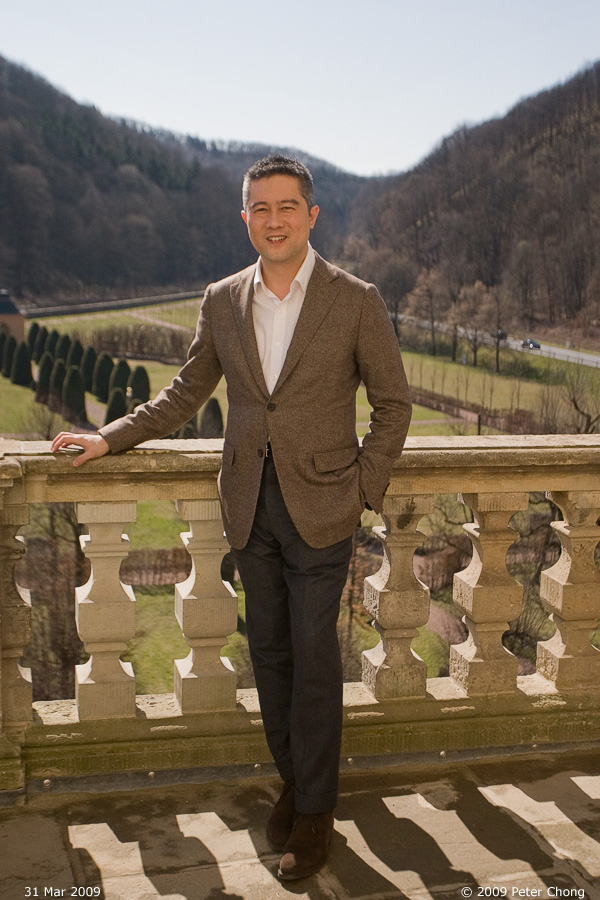


Coat by Eddie Chow made from Loro Piana cashmere and wool. Bespoke shirt by Turnbull & Asser, standard poplin; trousers by Italian Tailor of HK, Vitale Barberis Canonico's grey flannel; suede boots by Crockett & Jones.

Still extremely elegant. The cashmere/wool material is a bit country-ish like a smooth tweed. The texture of the material is quite amazing, and the hand feel is smooth. Again, excellent balance in the button position. Tapering shoulders accomodate for Steve's sloping shoulders, and the sleevehead feature a little roping. I would discourage normally a high rope or any rope for that matter on the sleevehead, but for the rustic material, and de-emphasized like Eddie has done here, it looks elegant and in place.

Tuesday, 21 April 2009

Double Breasted, an example

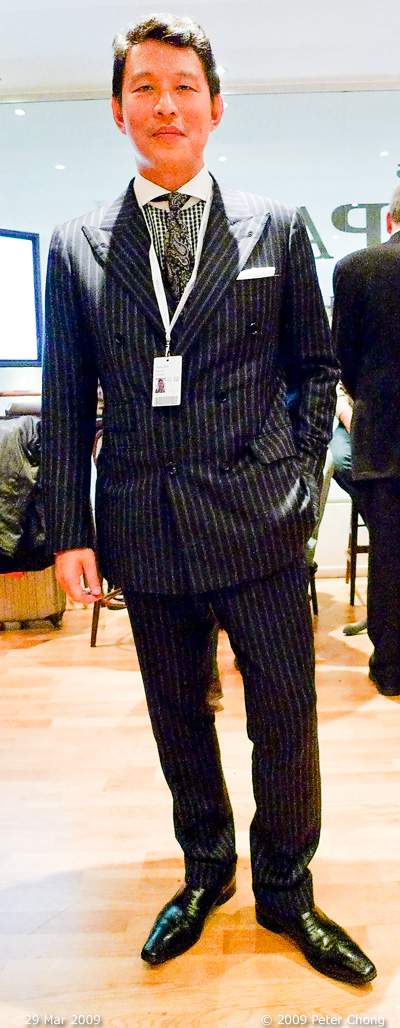
Double Pinstripe DB suit

The chalkstripe DB is a classic for any man's wardrobe...unfussy, it exudes a classic feel and style and is suitable for daytime wear for business and formal enough to carry one through an evening of cocktails and dinner.

I will start a series of articles to delve deeper into what makes a suit work or not...and we begin with a good friend - Wei Koh, Founder and Editor in Chief at Revolution Press...the publishers of watch magazine Revolution, menswear magazine The Rake and ladies luxury magazine Cake.

Wei is a natty and rakish (no pun intended) dresser, with a touch of wild modernism to traditional English styling.


The suit is made by Eddy Chow of Hong Kong. Fabric is Loro Piana Super 120 double pinstripe that from a far looks like a single chalk stripe. Shoes are from Gerard Sene.

My personal view of the suit:


  1. lovely cloth, looks like flannel, with nice double pintripes.
  2. collar spread nice and wide. Goes well with Wei's long, narrow face.
  3. paisley tie gives a anachronistic look, I would have preferred a larger tie knot with the wide cutaway collar spread.
  4. natural shoulder line, very nice. little or no shoulder pads. Shoulders cut just slightly larger than natural shoulder, but lack of padding allows it to fall naturally. Nice.
  5. coat collar sticks to neck, indicates good tailoring around the collar, especially the critical measurement of the back of the neck.
  6. the coat looks on the long side, making the torso look longer and the legs shorter. But on measurement, it is proportionally correct, indicating that the long torso effect is possibly due to balance of the button point resulting in a low crossover of the front panels. Consistent with this assumption, the level of the pocket openings, shown by the piping on the pocket flaps are higher than the lowest buttons. Also the lowest buttons close below the hip bone, making it difficult for Wei to put his hands into his pockets.
  7. by moving the 4 lower buttons up about 1.5", the crossover point would move up by the same amount and the lowest buttons would just about line up with the pocket piping. And the lowest buttons will be about hipbone level. This will help balance the coat and would have the effect of shortening the torso, and lengthening legs.
  8. coat has a nice nipped waist, emphasizing the V shape of the upper body.
  9. the button stance seems good...arranged in a square, possibly 4 5/8". The square stance is good for a lean physique.
  10. lapels look very straight, cut with little or no belly. Makes the coat look angular. This is fine, though personally I would prefer a bellied lapel, which will appear softer and is more pleasing to the eye.
  11. stripes on the piping on pockets made to line up with flap and coat front panels a nice touch. This used to be an Anderson & Shepperd touch, but now used by many bespoke houses.
  12. the sleeve does not show any linen. Shortening the coat sleeve slightly by 1/2 or 3/4 inches would allow some linen to peek through and would add dimension to the sleeves.
  13. the breast pocket correctly displays a nice pocket handkerchief, but same straight angular look carried from the unbellied lapels makes the coat look a bit severe. Would be nicer if it were gently curved upwards as it sweeps away from the center line.
  14. a good tailor would also make the front of the pocket buldge outwards slightly to accomodate a pocket square easily.
  15. the trousers are a bit narrow, the drain pipe further contributes to the appearance that the top is heavy.
  16. trouser leg length a tad long...too many breaks on the front line, side lines. This ruins the illusion of length and height. In a conversation with Wei, he remarked that this is due to the loose waistline of the trousers...causing it to slip. He is making provisions for braces to be retro-fitted to allow the trousers to hang properly.


photonotes: taken in-situ at the Blancpain booth during BaselWorld 2009 during cocktails. The lighting in the booth was less than ideal...mixed lighting of mainly halogens and flourescent and quite dim. The resulting image on the Panasonic DMC LX3 was grainy, and some judicious adjustments on Photoshop had to be done to salvage the image that it becomes barely usable.

Thursday, 27 November 2008

A visit to Northampton, and the Edward Green Factory

with Dr. Frank Muller. Originally written and posted in Timezone.com and Ask Andy Forum in 2004, with some updates.


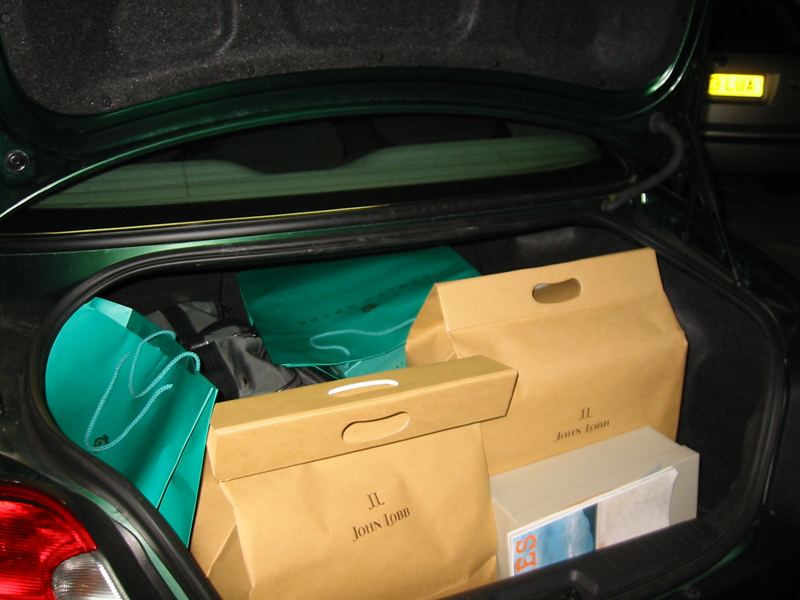
The boot of our car after an afternoon’s shopping in Northampton. Final count – 2 pairs of Edward Greens, 5 pairs of John Lobbs. What a success!

As a detour from a trip I made recently leading a group of watch enthusiasts to the Lange Uhren factory in Glashutte, Germany, I spent the weekend with a Lange's then Joint Managing Director - my good friend Dr. Frank Muller in London. We spent the afternoon in gentlemanly pursuits of browsing the stores in Savile Row, Jermyn Street and at the Burlington Arkade, before spending the evening at Ronnie Scotts with some great Jazz. We hired a car, spent the night in Cambridge University...we stayed in a small hotel right by the campus, and even managed to catch a live choral performance in one of the collages. The next day we went shopping in Northampton oand …ended up with the above spoils.

We called the Edward Green factory ahead, and secured an 11am spot with our hostess – Susie Jones. She met us cheerfully at the door, and showed us around.

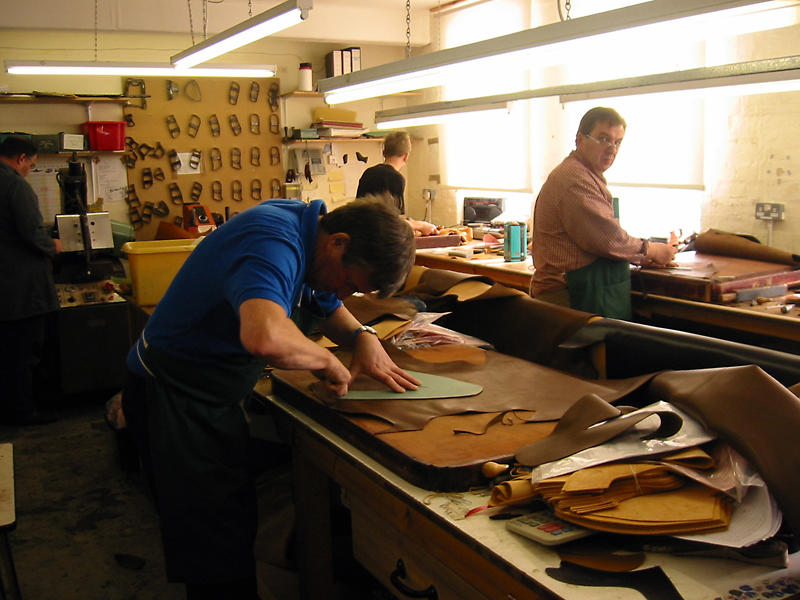
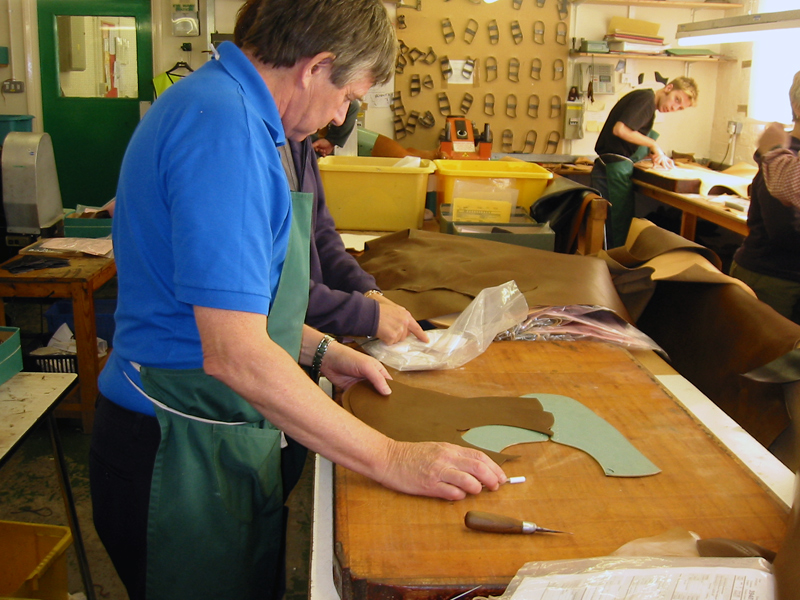
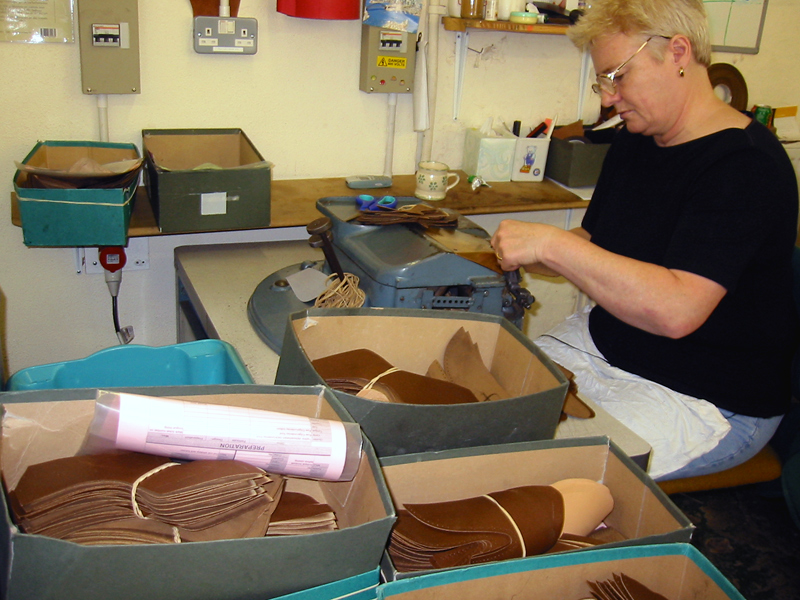
The first room we came to, we saw a team of men cutting leather. The process, known as clicking was performed by a highly skilled workman who would cut the individual pieces of leather into patterns. Edward Green shoes use Swiss calf. Bespoke shoes, at that time made under the supervision of Master cordswainer Tony Gaziano, is sent out to outhouses around Northampton. Tony has since left Edward Green and now on his own firm of Gaziano & Girling.


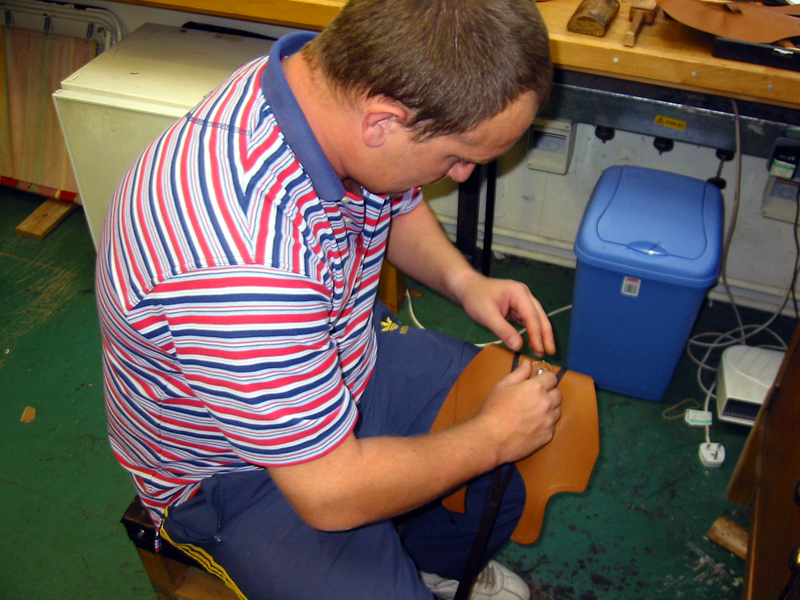
We were told that all clicking for Edward Green was done at this place. The picture below shows a master clicker, placing pieces of leather on his pattern (which, as shown is a piece of green cardboard).


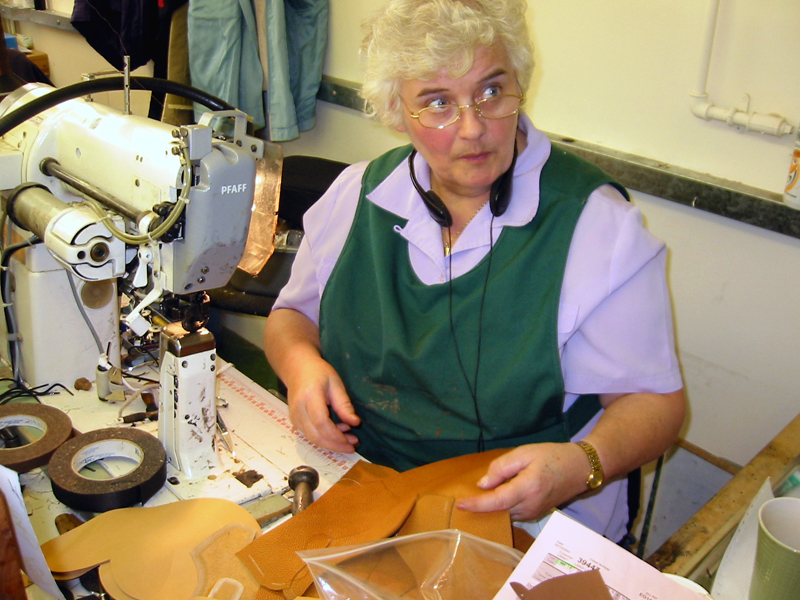
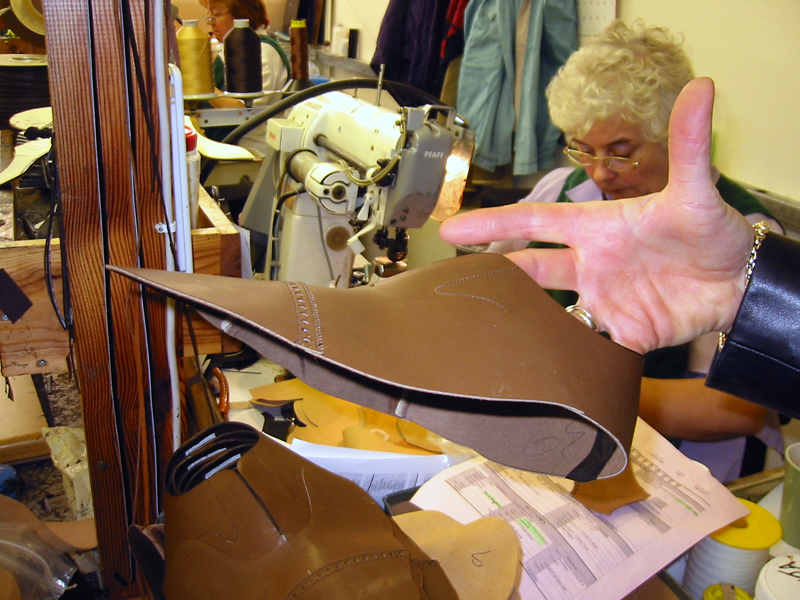
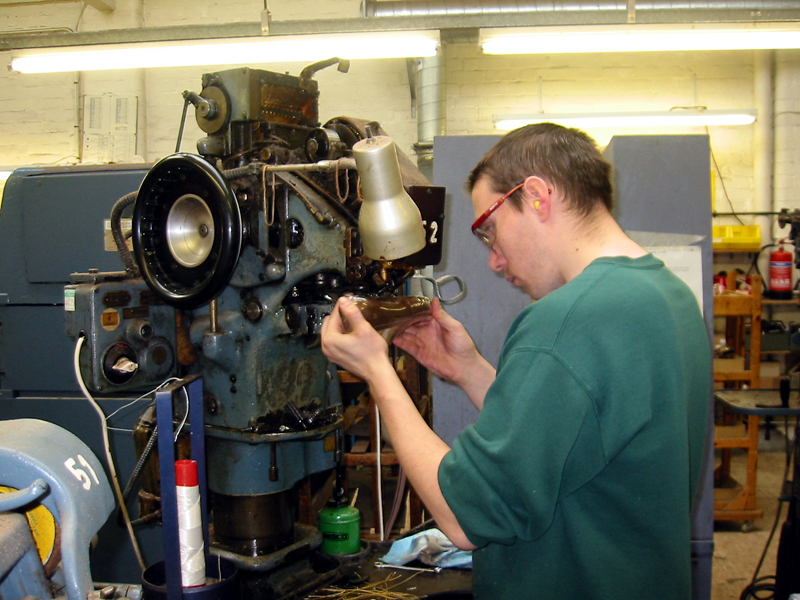
The patterns were then stitched together in these huge sewing machines, like those your mother would use for mending clothes, as shown below.


After stitching, the leather takes the shape of an upper.


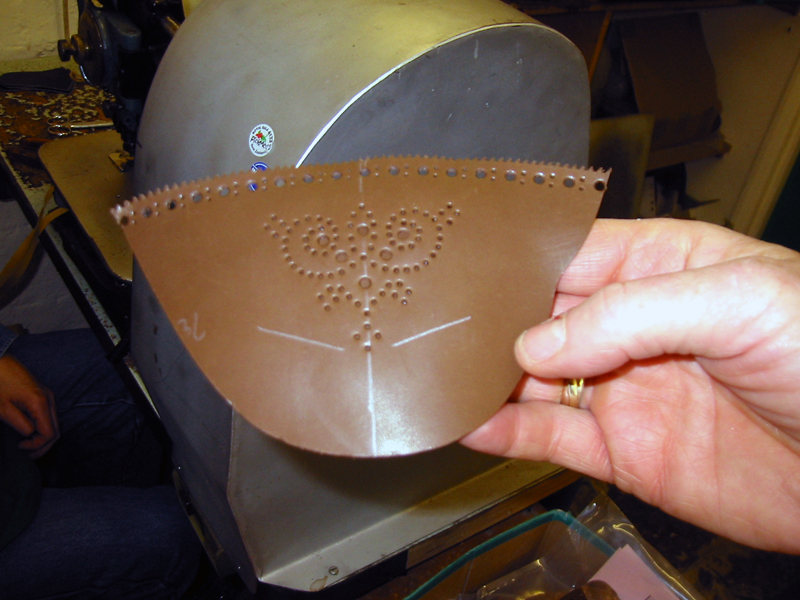
A machine was used to make the perforations in the brogue.


The broging pattern on the upper:


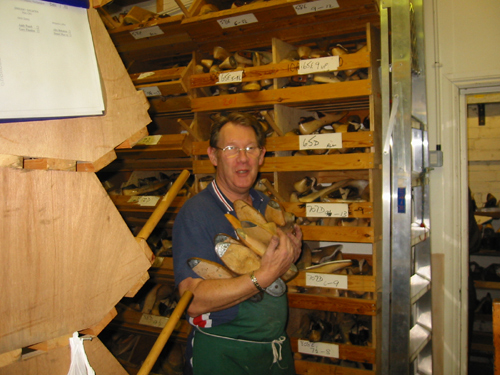
Next, we went to visit the man with the lasts. Here all the lasts were stored. Not sure why I only have the small picture for this shot. Bespoke lasts are kept elsewhere, these are RTW lasts.


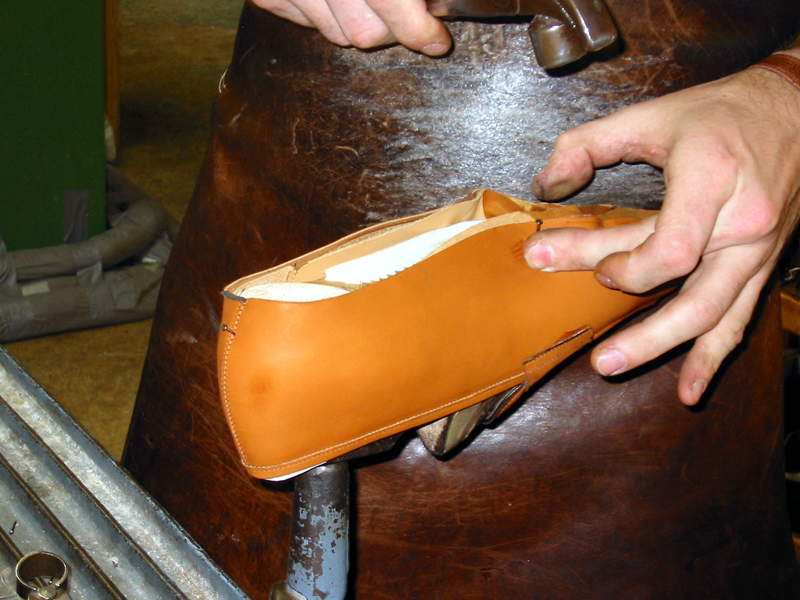
The sewn uppers were then stretched over the last like so. At this stage, the shoelaces were nothing more than pieces of cloth, just to keep the uppers closed.


The upper is then nailed onto the last, with temporary nails:


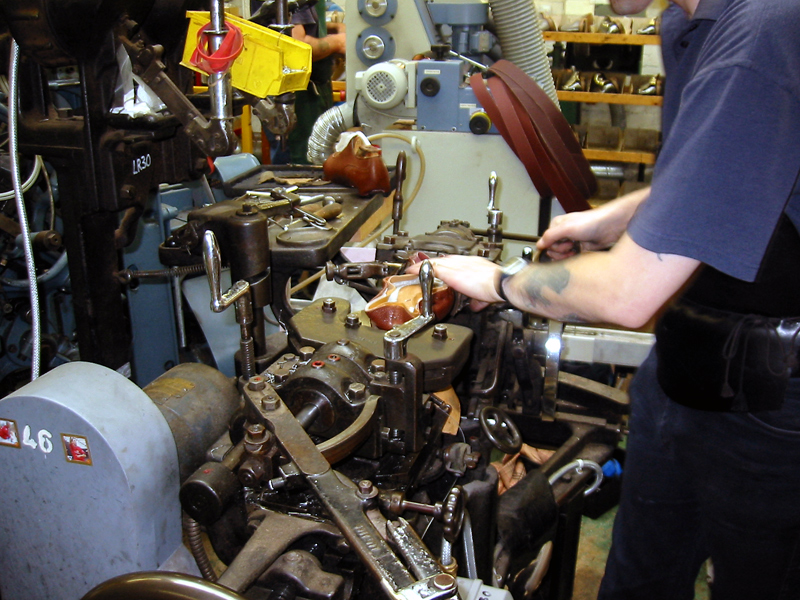
An iron wire is then lopped over the last, and pulled into place, stretching the upper over the last. A machine is used to do this:


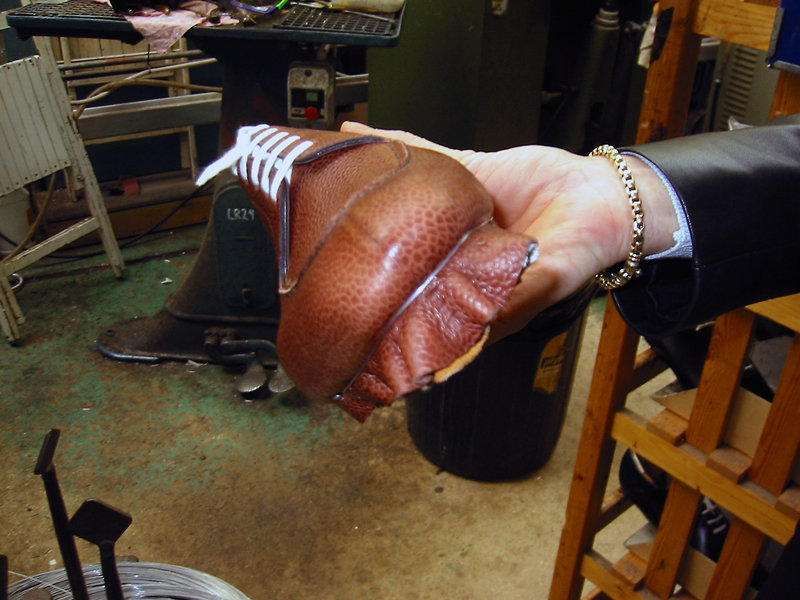
Then, the nails are then removed, and the shoe/last looks like this.


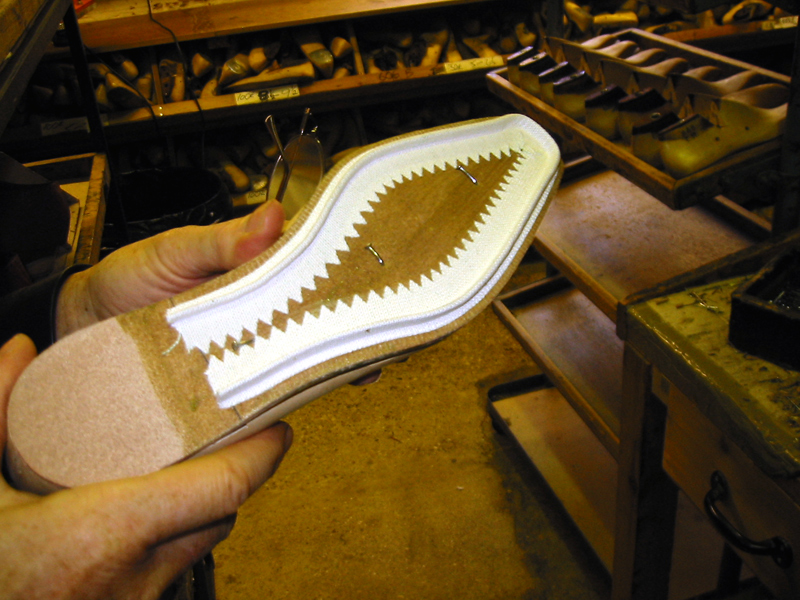
Another team, in the meantime, prepares the soles, but glueing in the feather. In the Northampton tradition, the feather is made from cloth, but the feather of a benchmade shoe can be also made of leather.


The shoe was then put into a Goodyear welting machine, which did the stiching of the welt, semi-automatically. The operator puts the upper/sole on, clamps it tight, and off the machine goes at a furious pace, finishing the complete welt in less than 20s. EG bespoke shoes are hand stitched, and do not use a Goodyear machine. This process is more involved, and requires more skill from the cordswainer, and of course takes more time.


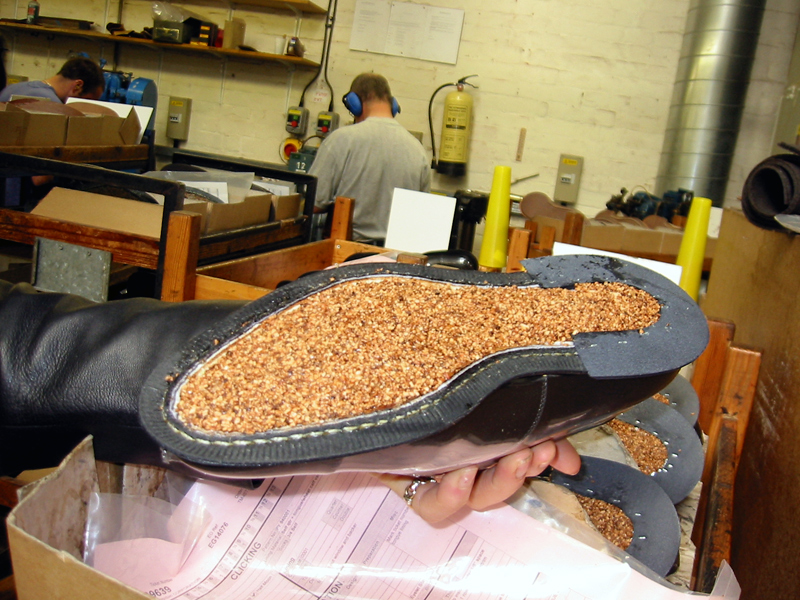
After welting, the inner side is then filled with cork bits:


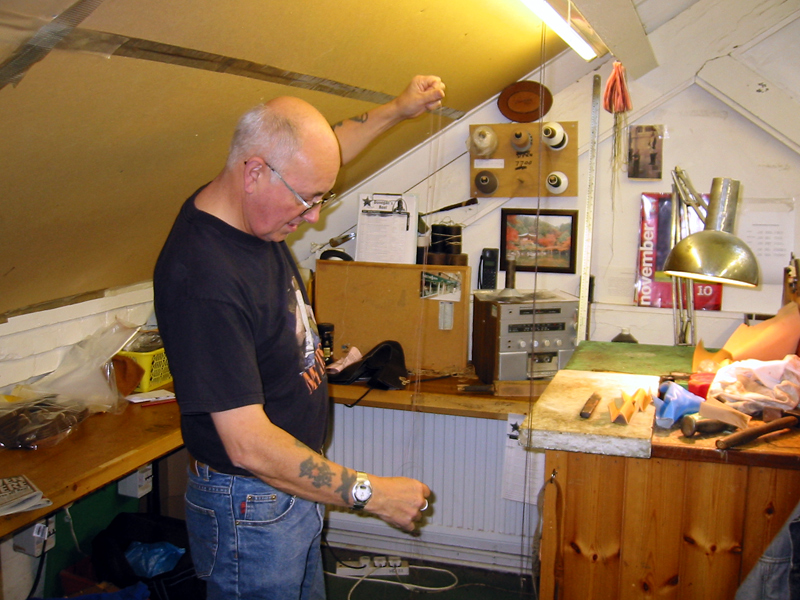
And the shoe is then sent for installing the sole. Backtracking upstairs, we came across these two gentleman, who were in charge of “skin stitching” the aprons and center toe seams. First, the thread is prepared by waxing:


Then, the aprons are stitched using a boar’s bristle. From what I can see, using a boar’s bristle, due to the ability of the bristle to flex, gives a smoother finish on the raised apron than can be achieved with a steel needle. Only Edward Green and John Lobb use this technique of sewing with a boar's bristle.


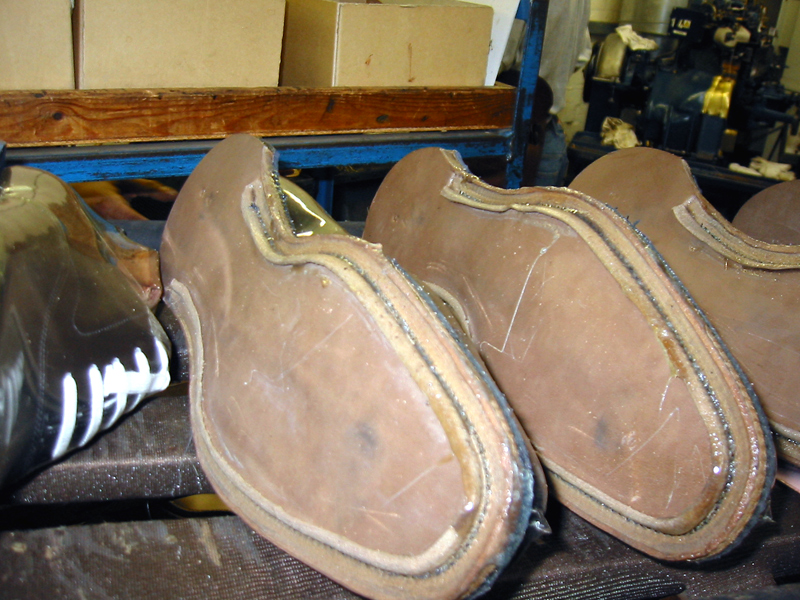
Returning to the shop floor, the outer soles are glued, and stitched on, leaving the thread inside the channels. The shoes then wait with the channels open:


The channel is then closed:


The heels are nailed on:


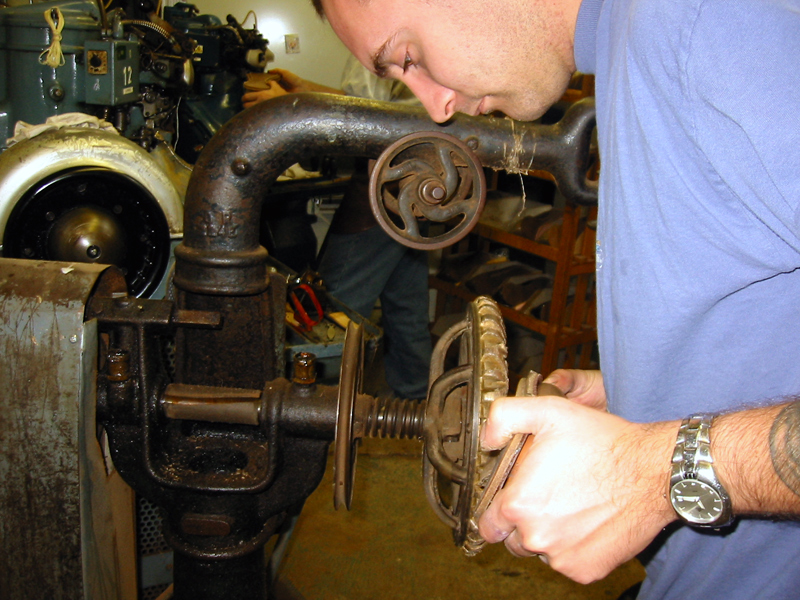
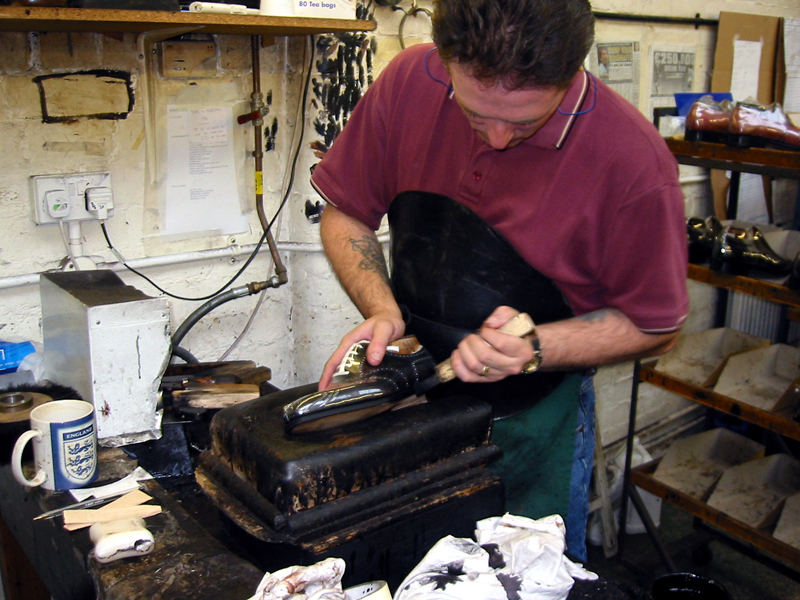
And the final finishing at the factory floor, the soles are cleaned, and a hot iron is used to apply polish to the edges:


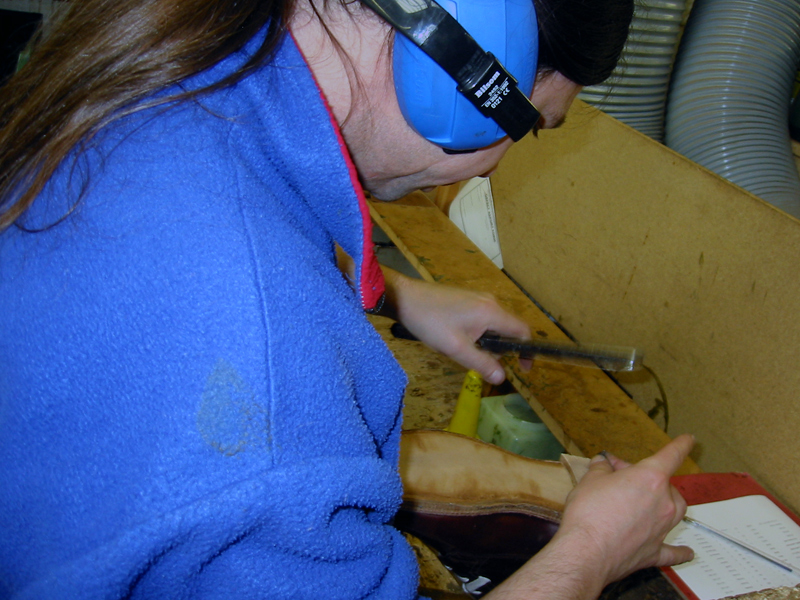
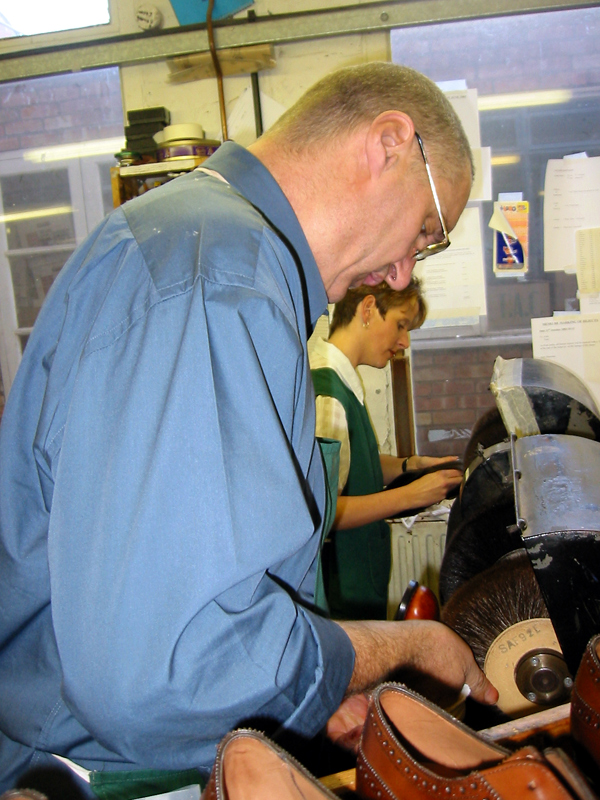
The shoe is then sent to the finishing department, where skilled craftsmen select the final color of the shoe, and finish it to their specifications:


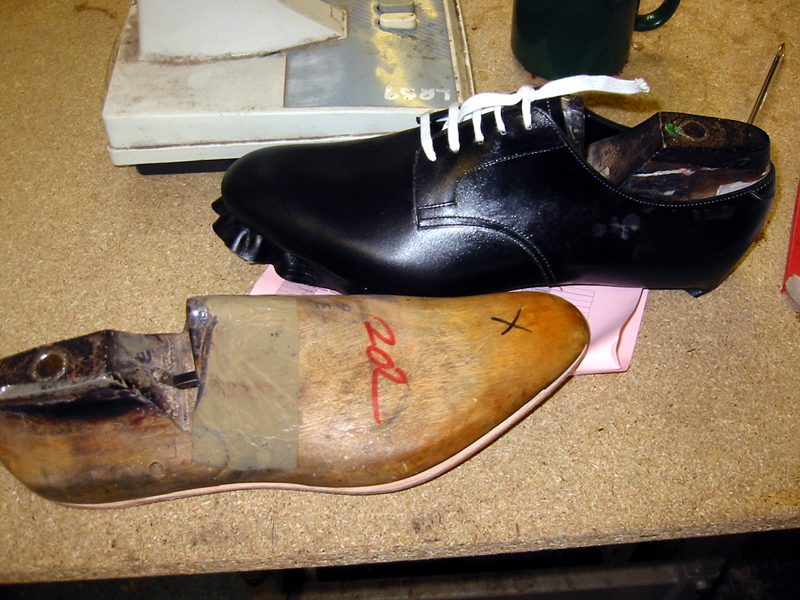
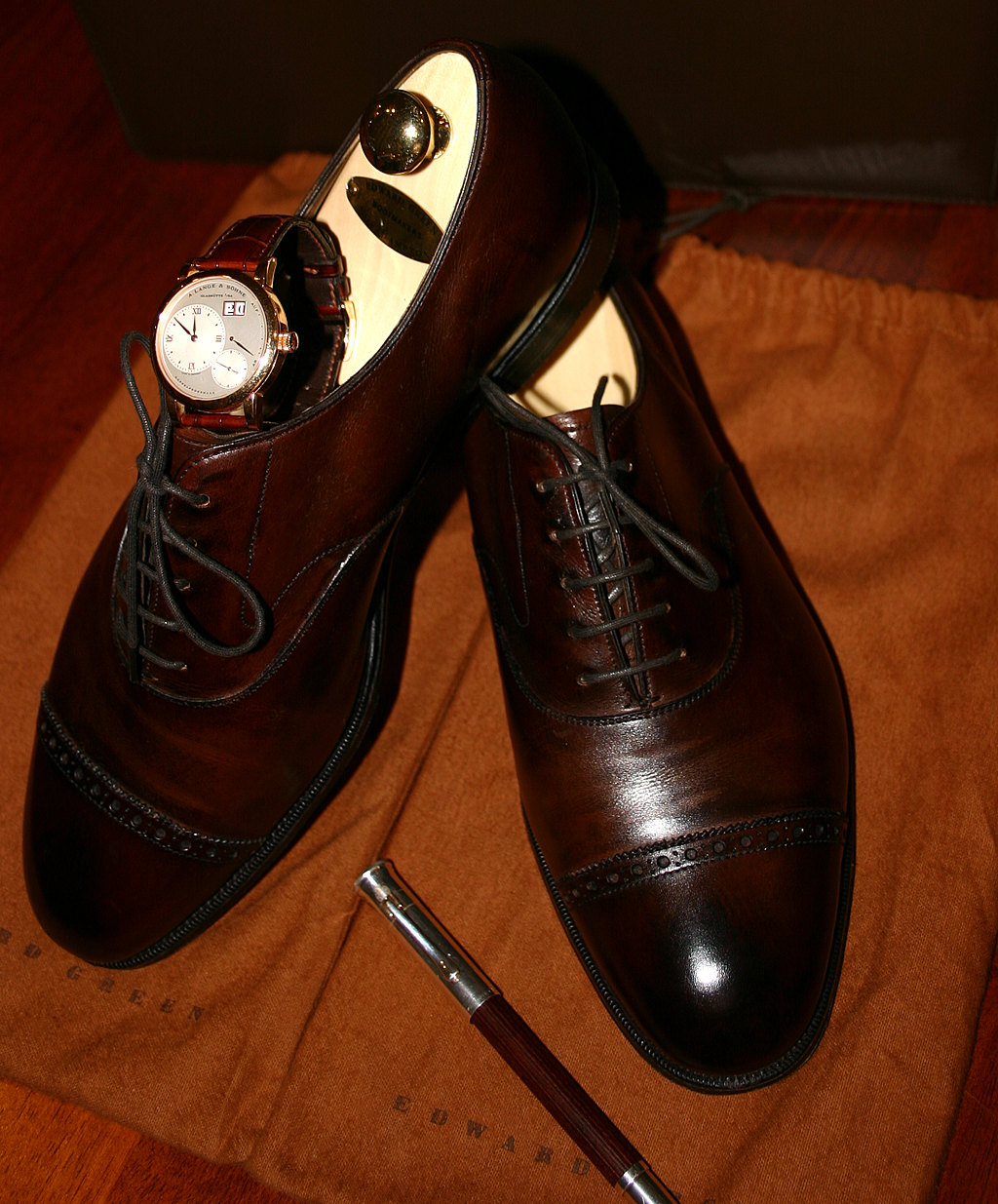
The final product...a beautiful patina, and wonderful shoe. This is the Berkerly in antique oak in the 202 last.